
Is Glass a Solid… or a Liquid?
The answer is actually both! There are differing opinions on how to describe materials like glass—substances that behave like liquids in some respects and like solids in others.
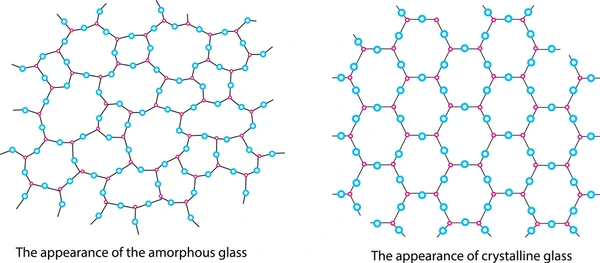
- Right Image: In a regular crystalline body, atoms are arranged in an orderly and predictable pattern.
- Left Image: In an amorphous (disordered) body like glass, the arrangement is much more random.
General Definition of Glass
Glass is primarily a combination of silica (sand), lime, and soda that is melted at high temperatures and then cooled into an amorphous form. Due to its transparency, malleability, chemical resistance, and aesthetic appeal, it is one of the most widely used materials in the construction, automotive, decoration, and home appliance industries.
Today, architectural glass serves as more than just a partition or cover. With technological advancements, safety glasses such as tempered, laminated, and double-glazed glass have emerged to provide beauty, security, energy savings, and sound insulation. At the Arshia Jam factory, the focus is on producing safety glass according to world standards to create safer and more beautiful environments.
Definitions from Different Perspectives
Architects and Designers: Glass is a functional tool for designing secure, beautiful spaces responsive to climatic needs.
Builders and Contractors: Standard and reliable materials guarantee the final quality and client satisfaction.
Homeowners and End Users: Modern glass is part of your home’s security, comfort, and beauty, offering resistance to impact and noise reduction.
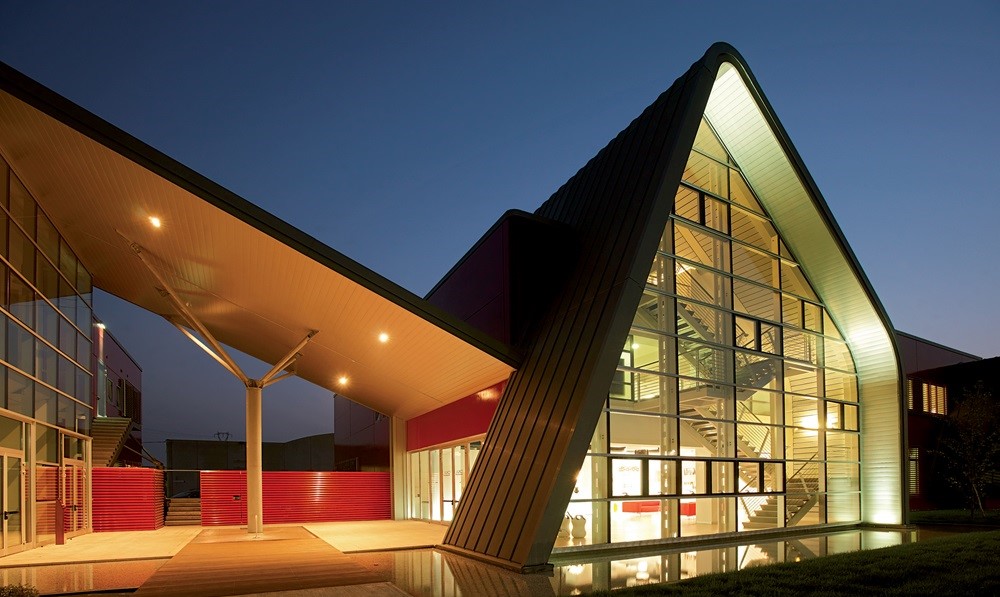
In the realm of modern architecture, glass serves as a strategic medium to manifest visual transparency and intelligent daylighting. By leveraging advanced glazing technologies, architects not only refine minimalist aesthetics and bridge the threshold between indoor and outdoor environments but also fulfill sustainability benchmarks. This is achieved through the precise control of thermal transmittance (U-value) and Solar Heat Gain Coefficient (SHGC), ultimately crafting responsive, safe spaces that harmonize with the biophilic requirements of users.
Definition of glass from the perspective of builders, contractors and project managers

In construction and civil engineering projects, choosing standard and reliable materials guarantees the ultimate quality and satisfaction of the employer. Our safety glasses in the form of tempered, double-glazed and laminated are designed and manufactured in a way that meets the technical needs, regulatory requirements and operating conditions in residential, commercial and public projects.Precise production, safe packaging, timely delivery and technical support are our commitment to professional builders.
Definition of glass from the perspective of building owners and end consumers
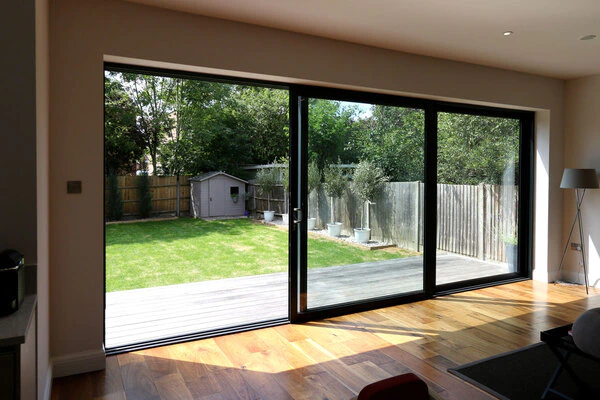
Today’s glass is not just for letting light in, it is also part of the security, comfort and beauty of your home. At Arshia Jam Factory, we use state-of-the-art technology to produce glass that is impact-resistant, energy-saving and makes your interior space calmer and safer. Whether it’s a window, glass railing or interior partition, we offer you the right solution with expert advice.
Types of Manufactured Glass
1. Tempered Glass
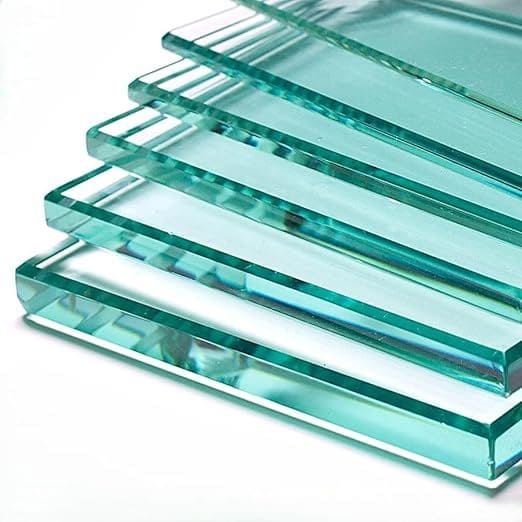
Scientific Introduction: This safety glass is heated to approximately 650–700°C and then cooled rapidly, increasing its mechanical and thermal resistance.
Applications: Glass doors, partitions, windows, building facades, and railings.
Features: 4 to 5 times stronger than ordinary glass; breaks into non-sharp fragments; withstands thermal shock up to 250°C.
Feature:
| Feature | Value / Description |
| Standard Thicknesses | 2, 3, 4, 5, 6, 8, 10, 12, 15, 19 mm |
| Thermal Resistance | Up to 250°C |
| Colors | Clear, Bronze, Blue, Gray |
FAQ
- Can it be drilled or cut? No. All cutting must be done before the tempering process.
- Is it bulletproof? No, but it has high physical impact resistance.
Laminated Glass
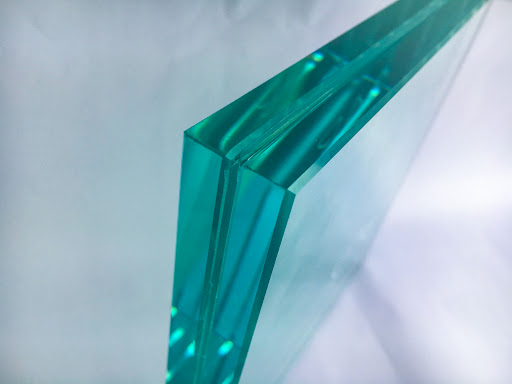
Laminated glass consists of two or more layers of glass bonded together with an interlayer like PVB or EVA.
Features:
- High impact safety
- Dura-bility against cracking and spalling
- UV protection (in certain types)
- Better sound insulation than single-pane glass
- Suitable for anti-theft or ballistic resistance
Applications:
- Glass railings and balustrades
- Glass roofs, floors, skylights
- Security doors
- Storefronts, banks, high-traffic public spaces
Technical Specifications:
| Feature | Value / Description |
| Common Structure | 6mm + 1.52mm PVB + 6mm |
| Interlayer Thickness | 0.38, 0.76, 1.52 mm |
| Max Dimensions | Up to 2400 × 4200 mm |
FAQ:
- Does laminated glass prevent theft? In suitable thicknesses, to a degree yes. Crossing laminated multilayer glass is very difficult and time-consuming.
- Difference between laminated glass and tempered glass? Tempered glass is heat- and impact-resistant but powderizes when broken; laminated glass maintains integrity upon breakage.
Double-Glazed Glass (IGU)
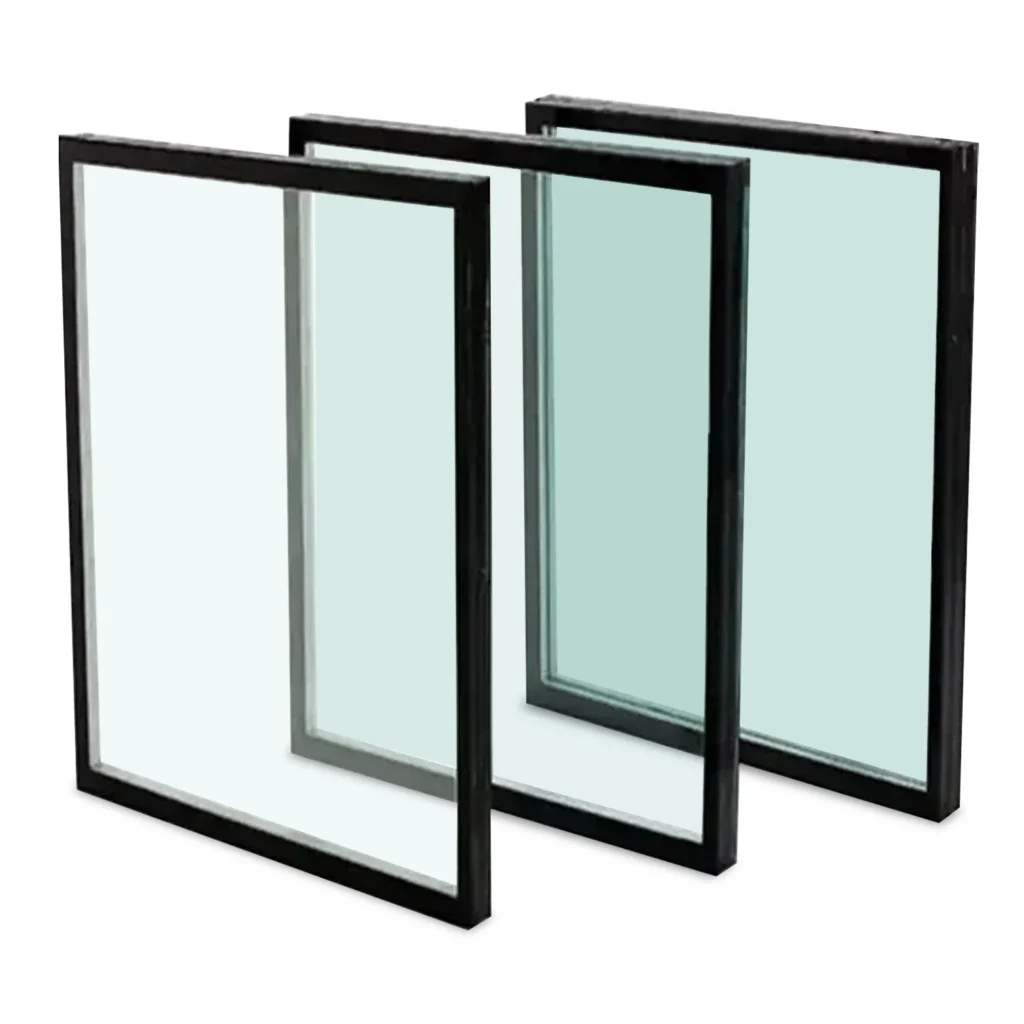
Scientific Introduction:
Double glazing consists of two glass panes separated by an air gap or Argon gas and sealed with spacers and sealants.
Features:
- Thermal and acoustic insulation
- Reduced energy consumption
- Reduced fogging (with Argon gas)
Applications:
Exterior windows and doors of buildings, especially in cold or noisy areas
Technical Specifications:
| Feature | Value / Description |
| Common Combination | 6+12+6 mm or 4+12+4 mm glass |
| Interlayer Gas | Dry air or Argon gas |
| Spacer Type | Aluminum / Thermal Break |
| Maximum Production Dimensions | Up to 2400 × 3000 mm |
| Customization Capability | Yes (glass type, thickness, gas, color) |
FAQ
- Is IGU fully sound-insulating? No. It reduces noise, but for complete sound insulation you can combine double-glazed with laminated glass.
- Is Argon gas mandatory? No, but it improves thermal insulation performance.
Patterned / Obscure Glass
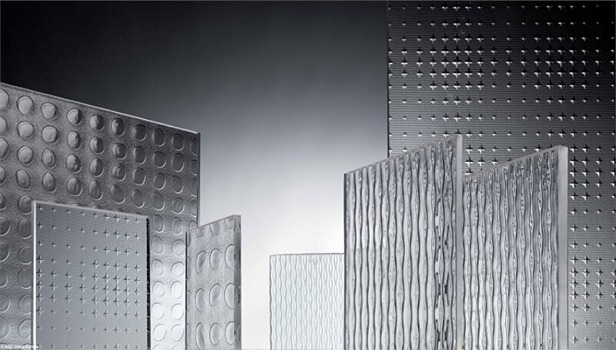
Scientific Introduction:Patterned glass has embossed patterns on its surface produced during manufacturing, reducing direct visibility.
Features:Features:
- Light transmission with privacy
- Various patterns for decorative use
Applications: - Bathroom windows, doors, internal partitions, stairwell windows
Tinted Glass
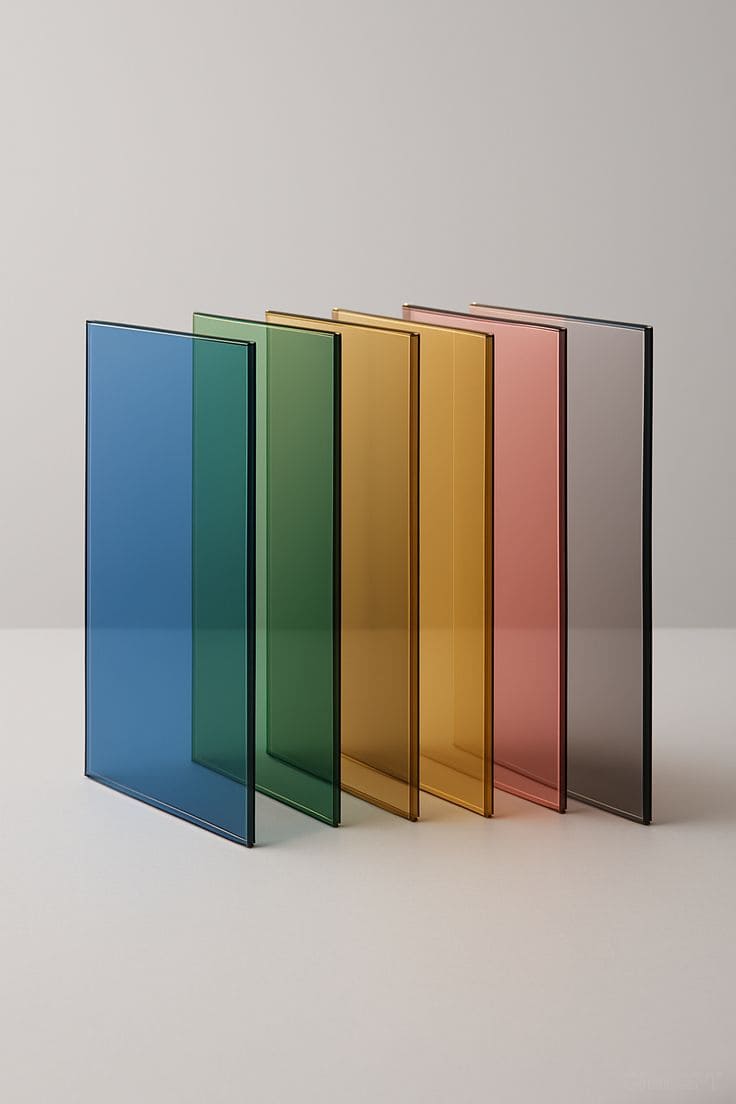
Scientific Introduction:
Tinted glass is produced by adding metal oxides to the molten glass and comes in colors such as bronze, gray, green, and blue.Features:
- Reduces solar glare
- Improves aesthetic appeal and environmental heat control
Applications: - Building façades, shop fronts, modern interior spaces
Reflective Glass
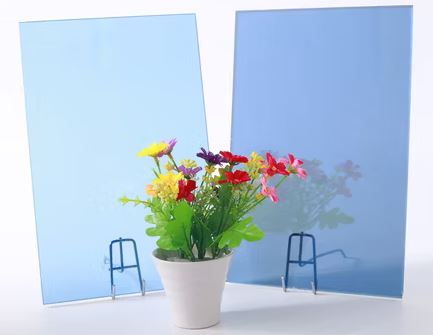
Scientific Introduction:
Reflective glass is a colored glass with a thin metallic or metal-oxide coating on the surface to provide light and heat reflection.
Features:
- Commercial and office building facades, windows requiring privacy
- Reduces heat and light transfer
- Mirrored exterior appearance
- Daytime privacy control
Applications:
Laminated Insulated Glass (Laminated IGU)
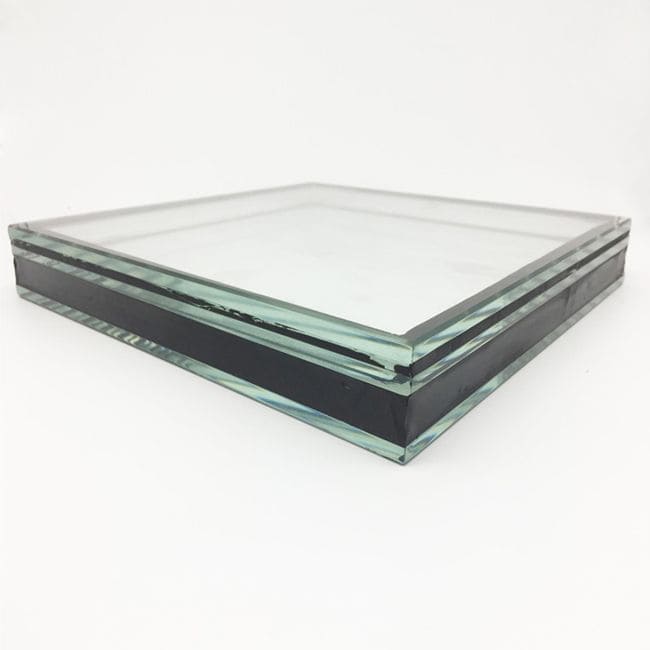
Advanced hybrid of thermal/sound insulation and safety. This product consists of two or more glass layers, at least one of which is laminated (with an interlayer such as PVB or EVA), separated by an air or Argon-filled cavity. This structure provides effective heat and sound insulation while increasing impact resistance and breakage control.
Features:
- Combines thermal insulation (double-glazing) and safety (lamination)
- Increased resistance to impact, earthquakes, and theft
- Very high sound reduction compared with single or simple double glazing
- UV protection
- Energy savings for residential and commercial buildings
- In the event of fracture, the laminated layer prevents cascading shards
Applications:
- Exterior windows in residential, commercial, hospital, and educational buildings
- Building façades of tall glass structures
- Doors and glass walls needing high thermal insulation and safety
- Anti-theft or bullet-resistant windows (multilayer laminated in IGU)
- Green buildings with energy-saving standards
Technical specifications for Laminated IGU:
| Specification | Value / Description |
| Common Structure | (Laminated Glass) + Air Space + (Single-layer or Laminated Glass) |
| Laminated Glass Thickness | Common: 6.38mm, 8.38mm, 10.38mm, 12.76mm, and more |
| Total Unit Thickness | Depending on the combination: From approx. 18mm to 40mm or more |
| Laminated Interlayer Type | PVB (Clear, Matte, Colored), EVA, SGP |
| Laminated Interlayer Thickness | 0.38mm / 0.76mm / 1.52mm or multi-layer |
| Interspace Gas Type | Air, Argon, or Krypton |
| Spacer Type | Standard Aluminum, Warm Edge, or Thermal Break |
| Light Transmittance | Depending on the glass combination: 70% to 85% |
| Heat Transfer Coefficient (U-value) | Approx. 1.1 – 2.6 W/m²K |
| Sound Reduction (STC / Rw) | 35 to 45 dB or more |
| Impact Resistance | Very High |
| Color Customization | Available |
| Production Dimensions | Up to approx. 4000mm × 2500mm or more |
| Common Standards | EN 1279, EN 14449, ASTM C1036, ISO 12543, etc. |
Fire-Resistant Glass
Scientific Introduction:
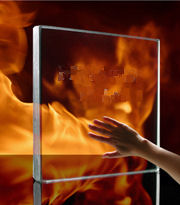
Fire-resistant glass is a safety glass that can resist flames, heat, and smoke for a specified period (30–120 minutes or more). These glasses may include one or more laminated layers with resistant gel or ceramic interlayers.
Features:
- Prevents flame, smoke, and heat transfer
- Maintains structural integrity in fire conditions
- Available in resistance classes (EI30, EI60, EI90, etc.)
- Suitable for frames made of heat-resistant metal
Applications:
- Fire-rated doors and partitions
- Emergency stairwells, escape stairs
- Commercial centers, hospitals, hotels
Anti-Theft / Burglary-Resistant Glass
Scientific Introduction:
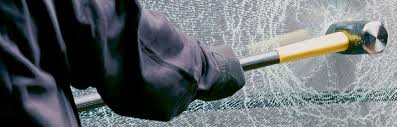
This glass consists of multiple laminated layers of glass with various interlayers (PVB/SGP) that resist repeated impact from common tools like hammers, axes, bars.
Features:
- High resistance to physical impact
- Maintains integrity even after cracking
- Delays intruder intrusion
- Can be combined with double-glazing or reflective glass
Applications:
- Jewelry store showcases, banks, exchange offices
- Ground-floor areas of buildings
- Government or security-sensitive offices
Bullet-Resistant Glass
Scientific Introduction:
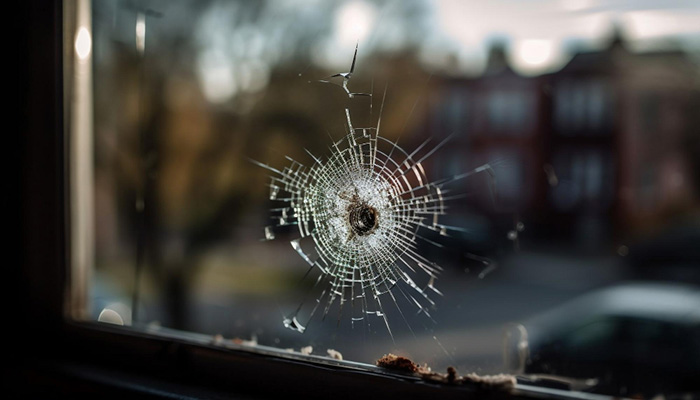
This glass is a multilayer laminated glass with specific polycarbonate or resin interlayers designed to resist bullets at high velocity. Classes are defined by weapon type and caliber according to EN 1063 or NIJ standards.
Features:
- Bullet resistance for multiple shots
- No interior spalling
- Maintains visibility and transparency to a degree
- Customizable per required protection class
Applications:
- Embassies, military and law enforcement facilities
- Sensitive financial centers
- Bulletproof vehicles, VIP spaces
Smart Glass (Smart Glass / Switchable Glass)
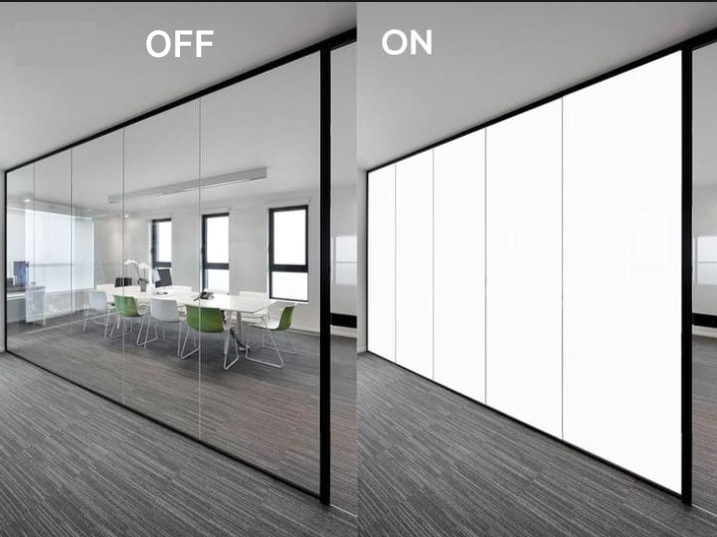
Smart glass is an advanced glass that can alter its optical properties electronically, thermally, or optically to control light transmission, visibility, or heat.
Common smart glass technologies include:
- PDLC: On/off clarity and haze with electricity
- SPD: Varying opacity and light transmission
- Electrochromic: Color change with applied voltage
- Photochromic and Thermochromic:
- Change with light or temperature
Main function:
In PDLC, dispersed liquid crystal droplets align under an electric field to switch between hazy and transparent states, enabling light passage and transparency when needed.
Features:
- Fast switching between opaque and transparent (fraction of a second)
- Privacy without blinds or curtains
- Energy savings (reduced heating/cooling)
- Can be laminated, double-glazed, or tempered
- UV blocking up to ~99%
- Reduces direct sun exposure and glare
- Optional manual, remote, sensor, or smart-building (BMS) control
Applications:
- Meetings rooms and executive offices
- Modern bathrooms and private spaces
- Hospitals (partitions)
- Exterior windows with light and heat control
- Luxury stores and showroom displays
- Multi-purpose spaces (office, educational, recreational)
Technical specifications sample (PDLC):
| Specification | Value / Description |
| Laminated glass Thickness | It depends on the application |
| Light Transmittance (Transparent Mode) | Approximately 80–85% |
| Light Transmittance (Opaque Mode) | Approximately 10–50% |
| Operating Voltage | 48–65 V AC |
| Switching Time | 0.1 – 1 Second |
| Service Life | More than 10 years under standard conditions |
| Operating Temperature | -10 to +60 Degrees Celsius |