
Smart glass
Smart Glass
Smart glass is an advanced type of glass that can electrically, thermally, or optically change its optical properties, allowing the user to control the amount of light transmission, visibility, or heat.
The most common smart glass technologies include:
PDLC (Polymer Dispersed Liquid Crystal): Switches between transparent and opaque using electricity.
SPD (Suspended Particle Device): Changes tint level and light transmission by aligning suspended particles with an electric field.
Electrochromic: Changes color or tint when voltage is applied, used mainly for energy-saving solar control.
Photochromic and Thermochromic: Change their transparency or tint automatically in response to light or temperature.
Main operation (PDLC)
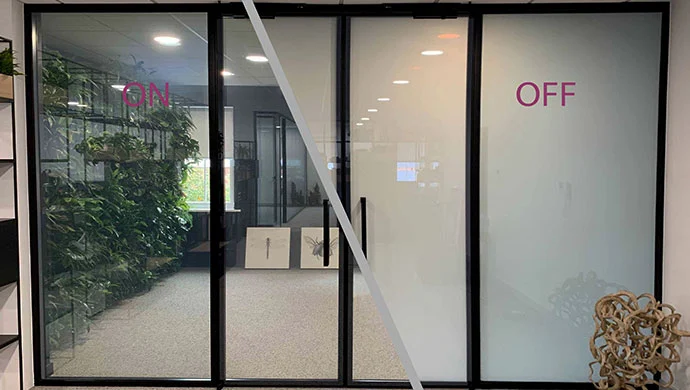
In PDLC technology, liquid crystal droplets dispersed in a polymer matrix can switch between opaque and transparent states when an electric field is applied. By aligning the liquid crystal molecules in response to the electric field, light passes through more directly and the glass becomes transparent.
Key features :
- Ability to change transparency in a fraction of a second (opaque ↔ transparent).
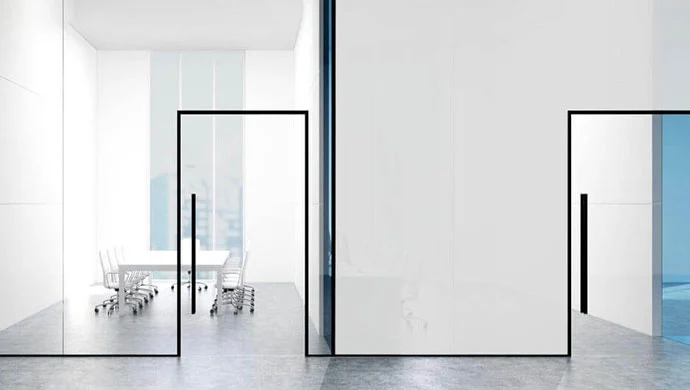
- Maintaining privacy without the need for curtains or blinds.
- Energy savings by reducing heating and cooling loads.
- Can be laminated, double-glazed, or tempered as a composite glass unit.
- Blocking up to about 99% of UV in many smart glass configurations.
- Reducing direct glare and eye strain from intense sunlight.
- Possible manual, remote, sensor-based, or Building Management System (BMS) control.
Typical applications:
- Meeting rooms and executive offices with on-demand privacy.
- Modern bathrooms and private interior spaces.
- Hospitals, replacing curtains between different sections.
- Exterior windows with controllable light and heat gain.
- Luxury stores and display windows.
- Multi-purpose spaces (office, educational, and recreational environments).